
Shipping urged to invest in fuel‑saving tech amidst future-fuel uncertainty
It cannot allow the absence of perfect policy certainty to become an excuse for inaction.
Future‑fuel uncertainty should not delay investment in proven fuel‑saving technologies already available to the shipping industry, BAR Technologies said, citing a study warning that the industry’s transition to net zero will be uneven and capital-intensive.
An EY Greece study said the industry will be constrained by alternative fuel availability, infrastructure, shipyard capacity, access to finance and fragmented commercial incentives.
Responding to the report, BAR Technologies said that whilst the industry is right to plan for long-term fuel pathways, much of the decarbonisation debate remains focused on what may become available in the future rather than what can be deployed now.
The EY study identifies energy efficiency and operational measures as amongst the most practical near-term actions available to shipping.
However, BAR Technologies argues that wind propulsion, already delivering measurable fuel and emissions savings on commercial vessels, must be recognised as a proven part of that immediate response.
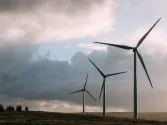
Tthe International Windship Association said more than 100 large commercial cargo ships, representing over five million tonnes of deadweight capacity, are now equipped to harness wind power.
“Shipping needs to stop treating decarbonisation as something that only begins when future fuels arrive, or every detail of the IMO’s Net-Zero Framework is settled,” John Cooper, CEO of BAR Technologies, said.
He added that the industry cannot allow the absence of perfect policy certainty to become an excuse for inaction.
“Wind propulsion is not waiting to be invented or proven; it is already operating on commercial vessels and reducing the amount of fuel they need,” Cooper said.
For wind propulsion, barriers are increasingly commercial and financial rather than technical.
Under many chartering arrangements, the owner funds the technology whilst the charterer receives much of the benefit through lower fuel consumption.
Until charterparty structures allow the costs, risks and savings to be shared more effectively, owners can be left carrying the investment and long-term performance risk.
Moreover, without competitive green lending or blended finance, owners may have to fund emissions-reduction technology at conventional commercial borrowing rates.
The EY study concludes that the pace of shipping’s transition will depend on coordination, commercial bankability, access to finance and action across the maritime value chain.