
East Asia and Pacific maritime sector needs $460b investment by 2040, World Bank says
Fleet renewal alone will require some $280b.
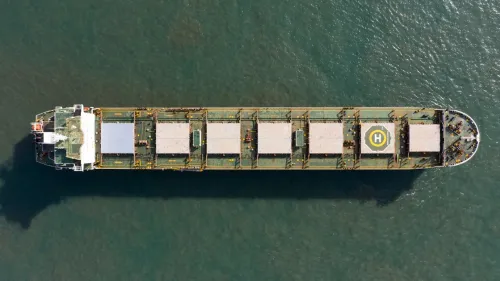
The maritime sector in East Asia and the Pacific (EAP) will require more than $460b in investment by 2040 to renew shipping fleets as well as expand and modernise ports, according to a World Bank report.
In its Ports, Ships, and Fuels: Maritime Efficiency, Safety, and Sustainability in East Asia and the Pacific report, the bank estimated that fleet renewal will require about $280b, whilst port expansion and modernisation will need $180b.
The World Bank said investment across ports, ships, and fuels will be needed to improve efficiency, strengthen safety, and support energy security as the maritime sector undergoes changes driven by automation, digitalisation, and alternative fuels.
“Maritime supply chains are the circulatory system of regional economies. When they function well, businesses become more competitive, markets become more accessible, and communities prosper,” said Carlos Felipe Jaramillo, Vice President for EAP at World Bank.
The report found that maritime trade across EAP exceeded 6 billion tonnes in 2025, supporting up to $3.7t in economic activity.
Each tonne of cargo moved through the region’s ports and shipping networks generates about $155 in direct economic output, with wider effects creating between $310 and $620 of value through manufacturing, trade, and household income.
The sector directly employs up to nine million people and supports as many as 18 million livelihoods across the region.
The World Bank said governments and industry will need coordinated investment and policy frameworks to mobilise funding for maritime infrastructure and technology.
The report highlighted the need to develop alternative fuels and supporting infrastructure as part of the sector’s transition. It also called for greater investment in maritime skills to prepare workers for changes in shipping operations.
The report said improving safety, worker well-being, and career opportunities will be key to attracting and retaining maritime talent across sea and shore-based roles.
The World Bank said a more efficient maritime sector can strengthen supply chain resilience, improve trade competitiveness, and support economic development across EAP markets.