
Ship retrofits grow more complex amidst decarbonisation
Lloyd’s Register issued a guidance covering 6 alternative fuels and 2 energy-saving techs.
Lloyd’s Register (LR) has published guidance outlining the technical, safety and operational considerations for retrofitting existing vessels with alternative fuels and energy-saving technologies.
The Guidance Notes for Retrofit of Alternative Fuels and Energy Saving Devices brings both technology categories together in a single framework to help shipowners assess the requirements of converting existing vessels.
The publication covers retrofits involving liquefied natural gas, methanol, ethanol, ammonia, hydrogen, and liquefied petroleum gas, as well as the installation of wind-assisted propulsion systems (WAPS) and air lubrication systems (ALS).
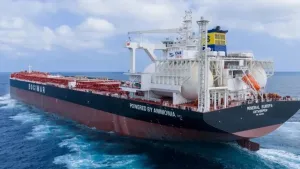
For alternative-fuel conversions, shipowners must consider whether existing engines can accommodate the intended fuel, how fuel will be stored onboard, where tanks can be positioned and how new systems can be integrated into the vessel's design.
“Factors such as engine conversion capability, available onboard space, tank location, fuel-system integration and project execution can have a major influence on project costs, timelines and operational outcomes,” LR said.
The guidance also highlights the importance of coordinating with shipyards, equipment manufacturers, flag administrations, and classification societies.
Early collaboration can help shipowners identify potential integration challenges and reduce the risk of delays during implementation.
Beyond equipment and vessel design, the guidance addresses the operational requirements associated with adopting new technologies.
These include crew training, revised operating procedures, updated safety management systems, risk assessments and statutory approvals.
These considerations are particularly important for ammonia and hydrogen, which introduce additional safety requirements that must be addressed before the fuels can be used onboard.
The publication also examines opportunities to improve vessel efficiency through energy-saving technologies, including WAPS and ALS.
Wind-assisted propulsion may also benefit from incentives under FuelEU Maritime, which includes a reward factor recognising the technology's contribution to reducing greenhouse gas intensity.
Paul Herbert, Principal Technology Specialist at LR, said retrofitting would play a critical role in shipping's decarbonisation as much of the global fleet is expected to remain in service well into the next decade.
“The challenge is no longer identifying technologies, but understanding how those technologies can be safely, practically and economically integrated into existing ships, whilst meeting increasingly demanding regulatory requirements,” Herbert added.
The guidance is available through LR's Retrofit Research programme, which provides reports, publications and tools covering retrofit demand, capabilities, and adoption trends.