
Japan, South Korea pivot to autonomous shipping with law reforms
New maritime laws allow for 24/7 unmanned ship operations.
Japan and South Korea are advancing the deployment of autonomous ships through regulatory reforms, shore-based monitoring systems, and large-scale safety testing, positioning themselves as early movers in the sector.
The Japanese government has revised the Ship Safety Act and related regulations to formally recognise ships equipped with autonomous navigation systems, introducing new certification categories covering equipment standards, maintenance requirements, and crew responsibilities.
Meanwhile, the country's efforts are supported by the second phase of the MEGURI2040 project, which enables vessels to be monitored and controlled from land-based centres while improving collision-avoidance technology.
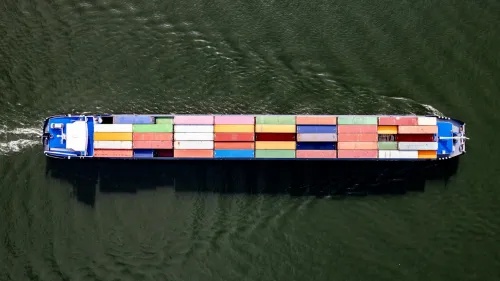
In its current phase, demonstration tests are being conducted with one remote island passenger ferry, one container ship, one RO-RO ship, and a newly-built container ship.
Separately, South Korea has introduced legal and regulatory provisions to support the testing and early deployment of autonomous ships, including exemptions from conventional manning requirements within designated operating zones.
Moreover, the country is pairing system development with digital infrastructure. Samsung Heavy Industries’ autonomous navigation system has received approval in principle from the Korean Register, whilst a Ship Integrated Data Centre has been established in Ulsan.