

Singapore’s port model is under pressure as shipping disruptions reshape trade
By Jianbo WuEfficiency alone may no longer be enough.
Singapore’s shipping, refining, and logistics sectors are facing a new kind of stress test. Disruptions to key maritime routes are not only raising costs but also forcing businesses to rethink how reliably global trade can move through established hubs.
For companies operating in Singapore, the issue is shifting from short-term volatility to longer-term structural change. For decades, Singapore has built its advantage on being the most efficient and predictable node in Asian trade. Its port operations, energy trading ecosystem, and refining cluster on Jurong Island have enabled firms to minimise delays and optimise costs. The scale of bunkering operations and the concentration of trading desks have reinforced this position.
However, recent shipping disruptions suggest that efficiency alone may no longer be enough.
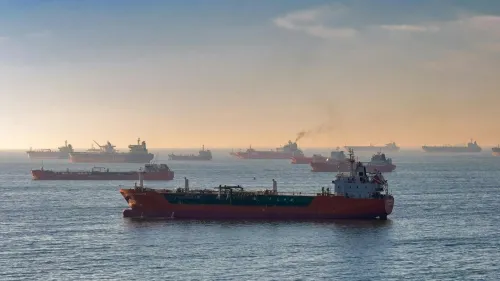
The immediate pressures are already being felt at the operational level. Shipping schedules have become less predictable and voyage times more variable. This has translated into higher fuel costs, longer waiting times, and more complex coordination for shipping lines calling at Singapore.
For refiners and fuel suppliers, volatility in feedstock flows and margins has become harder to manage. Traders operating out of Singapore’s energy desks are also navigating wider price swings and increased uncertainty in delivery timelines.
Port operations are not immune. Even highly efficient terminals, including those operated by PSA, face knock-on effects when vessels arrive off-schedule or in clusters. Congestion risks increase, and the ability to maintain smooth turnaround times becomes more challenging. For logistics firms, this creates downstream pressure on warehousing, inventory management, and last-mile delivery commitments.
Yet the deeper shift lies beyond these immediate disruptions. As rerouting becomes more common and delays accumulate, the effective capacity of the global shipping system declines. Ships spend more time completing each journey, reducing the overall volume that can be moved within a given period. In such an environment, reliability and flexibility begin to matter as much as scale.
This has important implications for Singapore’s business model. The city-state’s success has been built on reducing friction and concentrating activity in a single, highly efficient hub. But when global trade becomes less predictable, companies start to prioritise optionality. Shipping lines may spread their port calls across multiple locations. Commodity traders may diversify storage and blending points. Some logistics flows may gradually shift toward secondary hubs that can provide backup capacity.
Singapore remains highly competitive, and there is no immediate risk to its position as a leading maritime centre. However, the basis of competition is evolving. Instead of competing only on speed and efficiency, hubs are increasingly judged on how well they perform under stress.
Singapore has already invested heavily in maintaining its edge. Digital port systems, advanced traffic management, and its leadership in alternative marine fuels such as LNG and emerging options like ammonia all point to a forward-looking strategy. These investments strengthen Singapore’s role within the existing system. The question is whether they are sufficient if the system itself becomes less stable.
A more complex challenge is the need for functional flexibility across the wider maritime network. Capabilities such as rapid ship repair, retrofitting, and access to mid-tier shipyard services are often distributed across the region rather than concentrated in a single location. Strengthening these capabilities may require deeper operational linkages with neighbouring countries.
For Singapore, this introduces a strategic trade-off. Greater regional integration could improve overall system resilience, but it may also dilute some of the centrality that has historically underpinned its success. Managing this balance will be critical, not only for policymakers but also for businesses making long-term investment decisions.
For the business community, the implications are clear. Companies that depend on tightly optimised, just-in-time supply chains need to reassess their exposure to disruption. Building flexibility into logistics strategies, diversifying partnerships, and maintaining buffer capacity are becoming more important. Firms involved in energy trading, bunkering, and shipping services should also prepare for a more volatile and less predictable operating environment.
At the same time, new opportunities are emerging. Demand is likely to grow for services that enhance resilience, including repair, retrofitting, and modular logistics solutions. Companies that can operate across multiple nodes in the regional network may gain an advantage over those that rely on a single hub.
Singapore’s long-standing strength has been its ability to make global trade flow smoothly. The next phase may depend on how well it can support trade when conditions are less stable. For businesses, adapting early to this shift will not only reduce risk but may also create new avenues for growth.